
Fisetin is interesting.
Not as a token ingredient in another magical blue longevity powder, but because the biology of senolytics is fascinating.
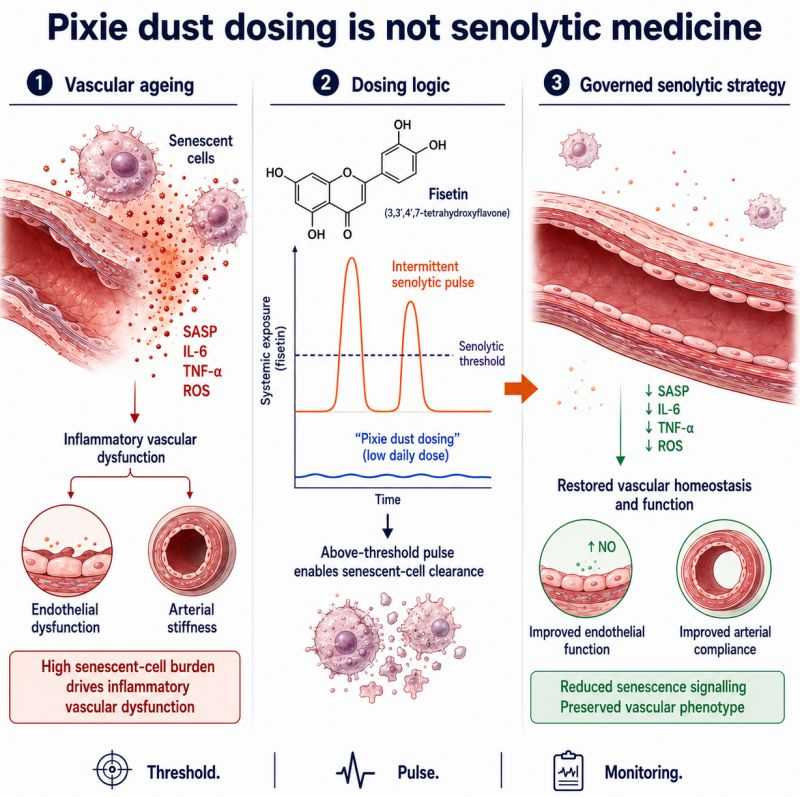
A recent preclinical vascular ageing study looked at intermittent fisetin supplementation in old mice. The aim was not general “wellness support”. It was to test whether fisetin could reduce vascular cell senescence, lower SASP signalling, reduce oxidative stress and improve arterial function.
That is a much more important biological question.
Senescent cells are not simply old cells. They are metabolically active, inflammatory, tissue-disrupting cells that can accumulate with age and contribute to dysfunction through the senescence-associated secretory phenotype, or SASP.
In the vascular system, SASP signalling, oxidative stress and impaired nitric oxide biology are part of the machinery through which vessels become stiffer, less responsive and more inflammatory with age.
So the translational question is whether a senolytic approach can improve vascular ageing by reducing senescent-cell burden and the inflammatory signalling around it.
My view on senolytics has been consistent since I started looking at the field properly: if they are being used, they should be pulse dosed, at a dose intended to create a biological effect, then stopped.
That is not just personal preference. It is the consistent finding in the literature.
The intended effect is not daily nutritional support. It is selective pressure on senescent cells, followed by withdrawal, recovery and reassessment.
A tiny amount of fisetin sprinkled into a daily proprietary blend may make the label look sophisticated, but it is mechanistically incompetent.
Enough for the marketing. Not necessarily enough for the biology.
There are now human studies asking the right sort of questions: intermittent fisetin, older adults, endothelial function, aortic stiffness, mitochondrial oxidative stress, senescence markers and SASP factors.
That does not mean fisetin is proven as an anti-ageing therapy.
The human evidence remains early. The right dose, schedule, patient phenotype, safety boundaries and clinical endpoints are still being worked out.
This is where longevity medicine should become more rigorous.
The question is not whether we can add fashionable molecules to a daily supplement tub.
The question is whether a particular patient, with a particular vascular, inflammatory or frailty phenotype, could justify a governed, intermittent, monitored senolytic strategy.
Patient selection.
Consent.
Monitoring.
Stopping rules.
Honesty that biological plausibility is not the same as proven clinical benefit.
Commercial enthusiasm exceeds data in much of the longevity market.
The answer is not to dismiss the potential because no RCT exists yet.
The answer is to stop flattening serious translational science into pixie dust dosing.
References
Mahoney SA et al. Intermittent supplementation with fisetin improves arterial function in old mice by decreasing cellular senescence.
Yousefzadeh MJ et al. Fisetin is a senotherapeutic that extends health and lifespan.
ClinicalTrials.gov: Fisetin to Improve Vascular Function in Older Adults.
